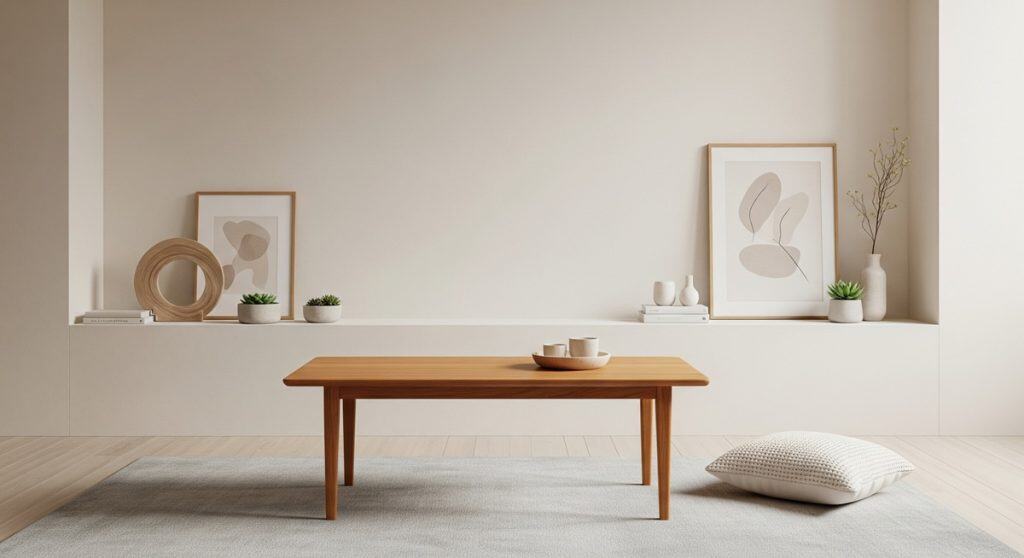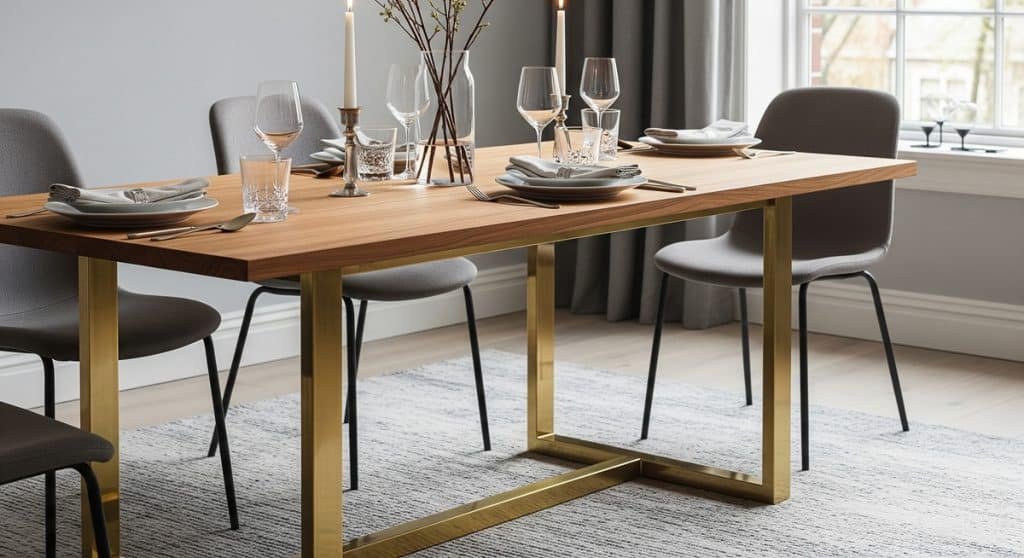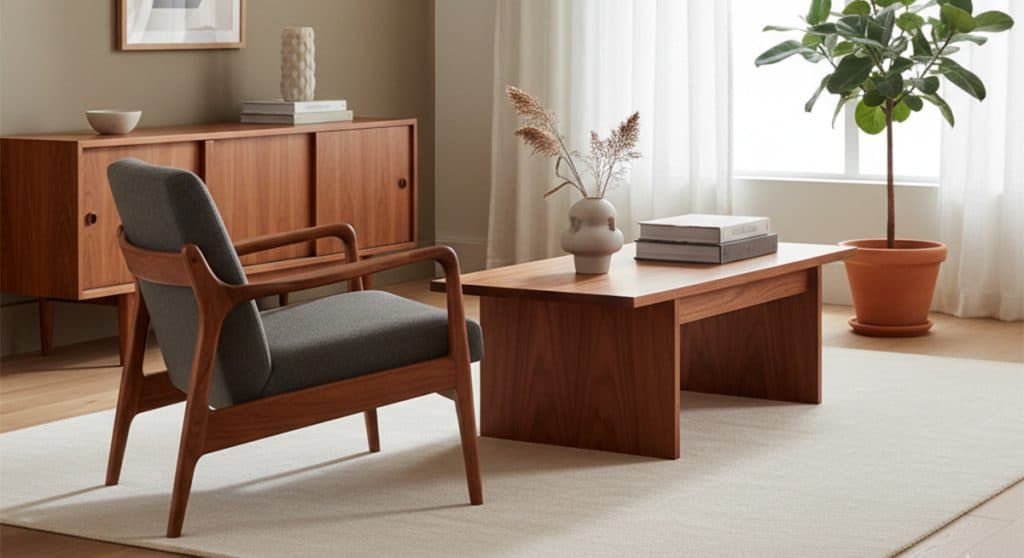
Few design movements have captured the imagination quite like Mid-Century Modern (MCM). For over 70 years, its principles have made mid-century modern teak furniture the benchmark for sophisticated, functional, and liveable interiors. For today’s architects and designers, it’s not a “retro” trend but a timeless language of clean lines, organic forms, and an honest appreciation for natural materials.
At the very heart of this aesthetic is the perfect pairing of form and material: Mid-Century Modern design and teak wood. The inherent warmth, rich amber tones, and beautiful, straight grain of high-quality teak perfectly embody the MCM connection to the natural world. It is the ideal medium for creating furniture that is both a functional object and a sculptural statement.
This guide is written for the discerning design professional. We will move beyond a simple overview and provide a manufacturer’s insight into the essential mid-century modern teak furniture archetypes. We’ll explore the key details to specify and the construction techniques that elevate these pieces from simple reproductions to investment-quality furniture that honors the legacy of the original masters.
The Core Principles of Mid-Century Modern Design
To create authentic MCM pieces, we must first share a common language built on its core philosophy. This design movement was a rebellion against ornate, heavy furniture, favoring a lighter, more democratic approach to living. Its key tenets include:
- Form Follows Function: An unwavering belief that an object’s design should be driven by its purpose, without sacrificing elegance or beauty.
- Clean Lines & Organic Shapes: A masterful blend of sharp, geometric forms—crisp rectangles, straight lines—with soft, biomorphic curves inspired by nature.
- Minimal Ornamentation: The inherent beauty of the material and the integrity of the form are the focus. There is nothing to hide behind; the craftsmanship itself is the decoration.
- Honesty of Materials: A celebration of natural materials, especially wood. The grain, texture, and color of the teak are not concealed but are showcased as the primary design element in all great mid-century modern teak furniture.
The Anchor of the Room: The Mid-Century Modern Teak Sideboard
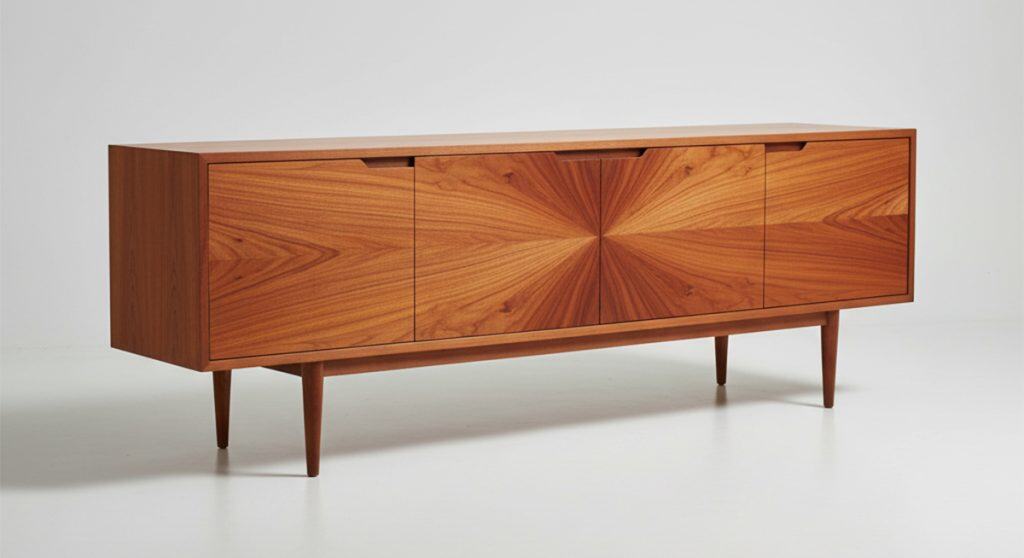
Perhaps no single piece is more emblematic of the MCM era than the long, low-slung teak sideboard or credenza. It is the quintessential anchor for a dining or living space—a masterclass in functional elegance that provides significant storage while maintaining a light, elevated presence.
Key Features to Specify:
- Profile & Legs: A clean, rectilinear cabinet that appears to float on a base of slender, tapered legs, often splayed at a subtle angle.
- Hardware: Minimalist hardware is crucial. This can be in the form of small, discrete metal pulls, or more commonly, integrated handles carved directly into the solid wood edges of doors and drawers.
- Grain Continuity: The front facade should read as a single, uninterrupted canvas of wood. This requires a stunning, continuous teak grain that flows across the multiple doors and drawer fronts.
A Manufacturer’s Insight: As a mcm furniture manufacturer, achieving this iconic look requires immense precision. The perceived simplicity is the result of complex craftsmanship. The frame demands perfect, robust joinery (like mortise and tenon) to support the weight without racking.
For the facade, our artisans excel at veneer work, carefully selecting and “bookmatching” sheets of teak veneer so the grain pattern creates a stunning, symmetrical visual effect—a detail that separates high-end mid-century modern teak furniture from mass-market imitations.
The Icon of Comfort: The MCM Teak Lounge Chair

The Mid-Century Modern lounge chair is a piece of functional sculpture. It is designed to be visually striking from every angle, showcasing its solid wood skeleton as a primary design feature. It invites relaxation while serving as an artistic focal point in any room.
Key Features to Specify:
- Exposed Frame: The chair’s beauty lies in its visible solid teak frame. Key elements include sculpted armrests, elegantly angled back supports, and tapered legs.
- Ergonomic Pitch: The angle of the seat and back is carefully calibrated for a relaxed, comfortable posture without the need for bulky mechanisms.
- Material Contrast: The warm, solid teak frame is intentionally contrasted with upholstered cushions. The choice of fabric—from textured wools to rich leathers—is critical to the final aesthetic.
A Manufacturer’s Insight: Crafting the sweeping, organic curves of an MCM lounge chair’s armrests from solid teak requires advanced woodworking skill. The most critical aspect is the joinery. The angled joints where the legs meet the seat and back must be engineered for immense strength. We utilize reinforced joinery techniques to ensure that this elegance is matched by enduring durability.
See how we handle material pairing in The Art of Contrast: A Manufacturer’s Guide to Pairing Teak with Metal, Stone, and Fabric.
The Social Hub: Crafting Mid-Century Modern Teak Furniture for Dining
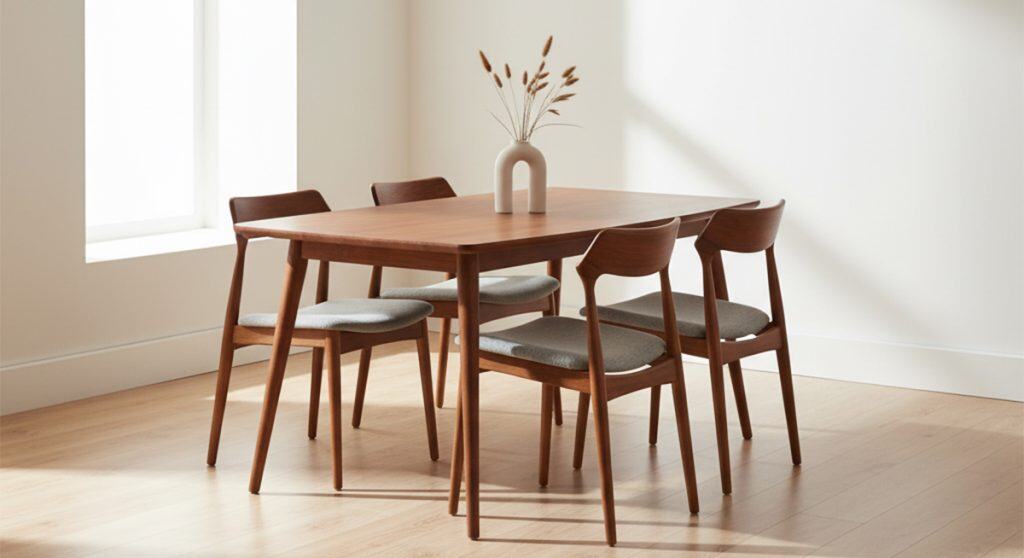
MCM dining sets were designed to foster connection, with a visual lightness that makes even smaller spaces feel more open and airy. The focus is on slender profiles and refined proportions that encourage comfortable, lingering conversations.
Key Features to Specify:
- Dining Chairs: Look for sculpted, often curved, backrests that provide support. Tapered legs are a must, and the overall form should be refined and lightweight, never clunky.
- Dining Tables: Characterized by sleek, relatively thin tabletops, often with a beveled or “knife” edge to enhance the sense of lightness. The top is supported by slender, tapered legs that are frequently angled outwards from the corners.
A Manufacturer’s Insight: The primary engineering challenge in mid-century modern dining chairs and tables is achieving stability and strength from such slender components. Using high-density, kiln-dried solid teak is essential.
Furthermore, the angled joinery for the legs must be executed flawlessly to prevent any wobble, ensuring a solid, reliable foundation that will last a lifetime. This level of detail is a hallmark of quality mid-century modern teak furniture.
Functional Elegance: MCM Coffee Tables & Desks
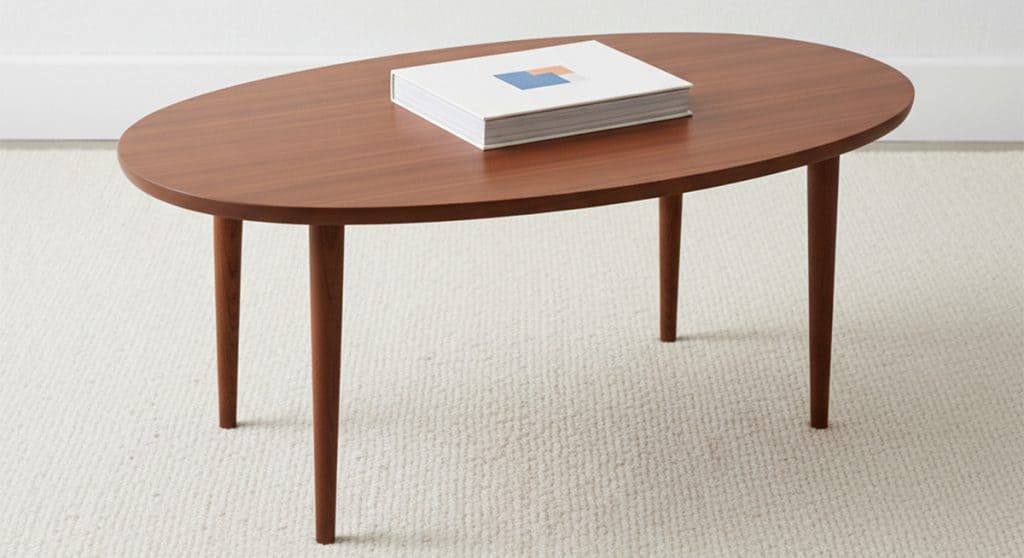
Essential pieces like coffee tables and writing desks in the MCM style are a perfect blend of everyday utility and artistic expression. They often served as the design “playground” where the movement’s love for both geometric and organic forms came to life.
Key Features to Specify:
- Shape & Form: While clean rectangles are common, this category is famous for its biomorphic shapes—think “kidney,” “amoeba,” or “guitar pick” tabletops.
- Tiered Surfaces: Many designs feature two-tiered surfaces, adding visual interest and extra functionality.
- Integrated Storage: Desks and tables often include minimalist drawers with routed-out pulls or beveled edges, maintaining an unbroken visual surface.
A Manufacturer’s Insight: Creating non-traditional, curved tabletops requires advanced laminating and shaping techniques. For high-use pieces like desks and coffee tables, the choice of finish is critical. We apply multiple coats of high-quality, durable lacquer or polyurethane to protect the teak from spills and wear while preserving its natural color and tactile beauty.
Learn more in The Manufacturer’s Guide to Teak Furniture Finishes.
Beyond Mid-Century Modern: A World of Timeless Teak Styles
The principles of clean lines, functional design, and material honesty make Mid-Century Modern a truly enduring choice for sophisticated projects. However, the beauty of teak wood is its incredible versatility, allowing it to serve as the perfect canvas for a wide spectrum of design aesthetics.
As a manufacturer with deep roots in both traditional craftsmanship and modern production, we are fluent in the language of global design. From the rustic charm of farmhouse aesthetics to the serene, minimalist lines of Japandi and the robust elegance of industrial styles, we have the expertise to bring any vision to life.
To see how we interpret these diverse aesthetics and to explore the full range of timeless looks we can produce for your projects, we invite you to visit our comprehensive pillar page.
Explore our full guide: A Manufacturer’s Guide to Timeless Teak Furniture Styles
Partnering with Naramulya for Your MCM Vision
The core principles of Mid-Century Modern design—unwavering quality, honesty of materials, and timeless function—are the same principles that guide our manufacturing philosophy at Naramulya. We understand that executing this beloved aesthetic demands a deep respect for the details, a mastery of woodworking, and an unwavering commitment to quality.
We are not simply fabricators; we are partners for design professionals who need to bring a specific, sophisticated vision for mid-century modern teak furniture to life.
Are you specifying a Mid-Century Modern aesthetic for your next project? Partner with a manufacturer who respects the details and delivers the quality.