In commercial architecture and high-end hospitality design, specifying mixed material furniture—the integration of solid wood with industrial metal, natural stone, or contract textiles—is frequently treated as a purely aesthetic decision. However, from a manufacturing perspective, combining disparate materials is a severe engineering risk.
Wood is a hygroscopic, anisotropic material that continuously expands and contracts. Metal and stone are dimensionally inert. Rigidly fastening these materials together without calculating for differential movement guarantees structural failure: the wood will split, the fasteners will shear, or the stone will crack under the transferred kinetic tension.
At Naramulya, we approach mixed-material fabrication as a strict mechanical discipline. This technical guide outlines how our commercial-scale facility engineers secure, long-lasting integrations for demanding B2B deployments.
1. The Physics of Differential Movement
The fundamental challenge of mixed-material fabrication is managing dimensional instability. Tectona Grandis (Indonesian Teak) is exceptionally stable compared to other hardwoods, but it still responds to fluctuations in HVAC humidity.
If a solid teak tabletop is firmly bolted to a rigid steel frame using fixed boreholes, the steel will prevent the wood from expanding naturally across its grain. This creates immense internal shear stress. Within a single commercial heating/cooling cycle, the tension will physically tear the wood fibers apart, resulting in catastrophic cracking down the center of the panel.
The Naramulya Execution: We eliminate this stress by engineering “floating” connection systems. Rather than hard-bolting wood to metal, our steel sub-frames feature precision-machined slotted or oversized holes. We utilize heavy-duty Z-clips, figure-8 fasteners, and threaded brass inserts with machine screws. This mechanical allowance permits the teak panel to expand and contract laterally by several millimeters without transferring any kinetic stress to the metal frame or the fasteners themselves.
2. Metal Integration: Precision Tolerances and Coating Durability
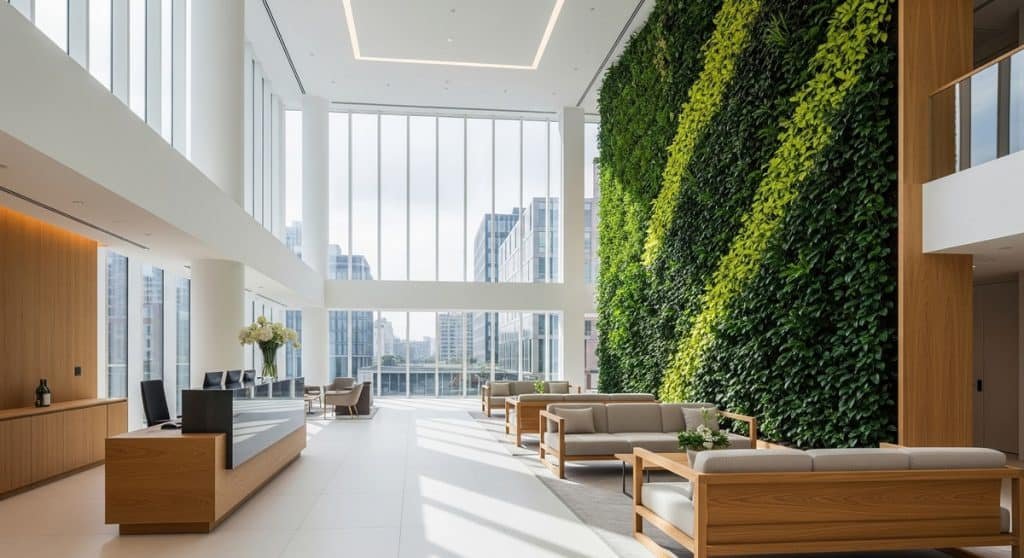
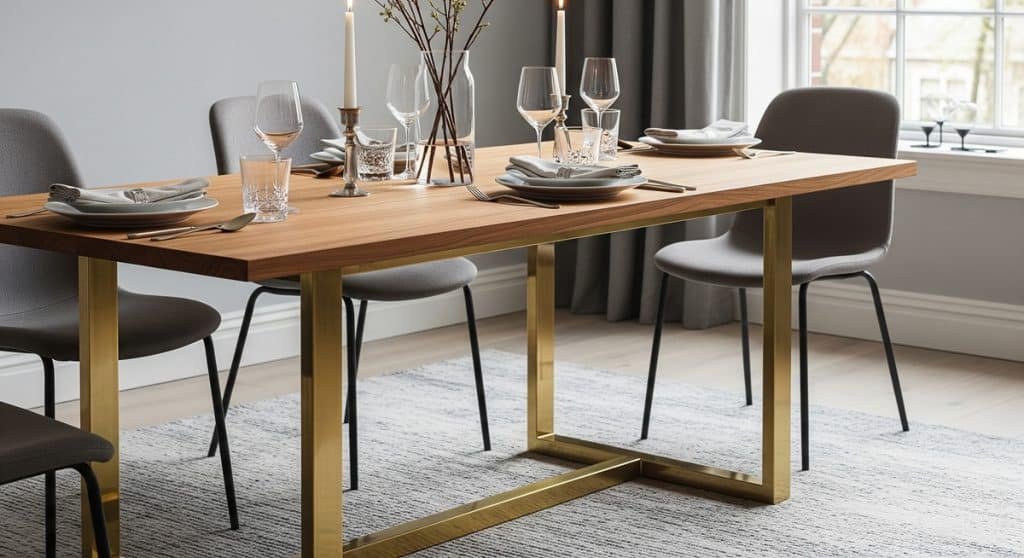
Modern commercial and industrial aesthetics frequently pair teak with powder-coated steel, extruded aluminum, or brushed brass. In these integrations, machining tolerances must be absolute.
In high-traffic Food & Beverage (F&B) environments, a gap between a metal inlay and a wooden surface is a health code liability, acting as a trap for moisture and bacteria.
The Naramulya Execution: To achieve flawless, flush reveals between wood and metal components, our facility relies on industrial CNC routers calibrated to micro-tolerances of 0.15mm to 0.20mm. For the metal components themselves, we specify commercial-grade powder coating for steel elements, baked at high temperatures to create an impenetrable, polymerized shell that resists the aggressive alkaline cleaning solvents used in hospitality housekeeping protocols.
3. Stone Integration: Managing Static Loads and Chemical Adhesion
Combining teak with heavy natural stone (such as Calacatta marble or black granite) creates a powerful architectural statement, but it introduces massive static load requirements and complex adhesion challenges.
A standard 3cm thick marble slab exerts immense downward pressure. Standard furniture frames will deflect (sag) under this weight over time, causing the rigid stone to fracture. Furthermore, standard PVA wood glues cannot bond porous wood to non-porous stone.
The Naramulya Execution: 1. Load-Bearing Infrastructure: We engineer the teak bases for stone-topped furniture using oversized, heavy-duty Mortise and Tenon joinery, reinforced with internal structural stretchers and torsion boxes. This ensures the frame maintains absolute rigidity and zero deflection, even under hundreds of pounds of static load. 2. Elastomeric Adhesion: To bond the stone to the wood (or to a concealed plywood sub-deck), we strictly utilize industrial-grade elastomeric polymers or specialized 2-part epoxies. These adhesives cure with a specific degree of flexibility, allowing them to absorb the micro-movements of the teak substrate without snapping the chemical bond or stressing the stone inlay.
4. Contract Textile Integration: Wyzenbeek Ratings and Foam Cores
Integrating upholstery into a solid wood frame elevates the ergonomic comfort of commercial seating, but the textiles and foam must meet rigorous B2B operational standards. Retail-grade fabrics will pill, tear, or fade within months in a hotel lobby or resort patio.
The Naramulya Execution: We collaborate with specifiers to integrate high-performance contract textiles into our teak frames.
Outdoor Resilience: For exterior resort loungers, the cushioning system is a technical assembly. We utilize reticulated (open-cell) quick-dry foam cores wrapped in solution-dyed acrylic fabrics (such as Sunbrella). This allows heavy tropical rain to drain completely through the cushion within minutes, preventing mold and mildew while ensuring the fabric remains UV-stable.
Abrasion Resistance: For interior commercial seating, we recommend and integrate fabrics rated for a minimum of 50,000 to 100,000 “Double Rubs” on the Wyzenbeek scale, ensuring decades of kinetic resistance against guest traffic.
How Mixed Materials Define Timeless Furniture Styles
As we’ve explored, the artful combination of teak with materials like metal, stone, and fabric is a powerful tool for any designer. These pairings are not just about contrast; they are the fundamental building blocks of many of the world’s most enduring design aesthetics.
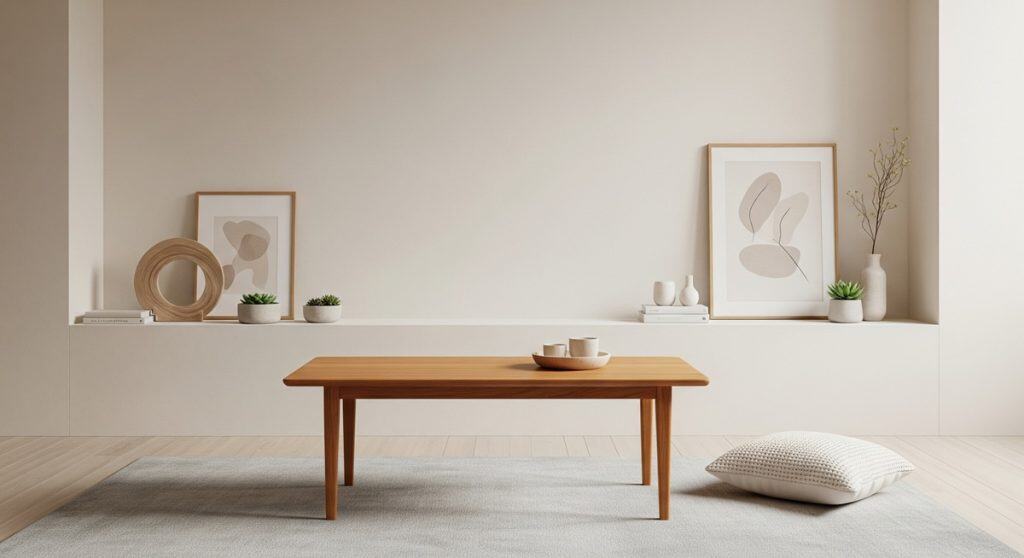
The specific way these materials are combined is what gives a piece its distinct character. The clean lines of black powder-coated steel against teak, for instance, are a hallmark of the Industrial and Modern Minimalist movements. The soft, organic feel of woven rattan or natural linen paired with teak is central to the Japandi and Coastal styles.
Understanding these foundational pairings is the key to mastering different design languages. To explore these aesthetics in greater detail, we invite you to read our complete guide to timeless teak furniture styles.
Conclusion: Eliminating the Compromise of Contrast
Executing high-quality mixed material furniture is an exercise in applied physics and material science. When disparate materials are forced to coexist in high-traffic environments, hope is not a strategy—precise engineering is.
By partnering with Naramulya, architects and procurement managers secure furniture where the metal, stone, and fabric are integrated with the exact same structural uncompromising authority as the teak itself. Submit your CAD specifications to our technical team to ensure your mixed-material designs are engineered for permanence.