When procurement managers and architects search for an “Indonesian teak furniture manufacturer,” they are frequently met with mass production operations that prioritize volume over structural integrity. Naramulya operates differently. We are a commercial scale facility grounded in the exact execution and standards of a technical workshop.
For our B2B technical partners, the final product is only as reliable as the workflow that built it. Our furniture manufacturing process is engineered around structural honesty, strict moisture control, and precise material science.
Here is a technical overview of the five critical stages in our commercial grade production line, from raw material procurement to global container dispatch.
Step 1: Material Procurement and Structural Grading
The foundation of our engineering process begins with material transparency. We strictly utilize Tectona Grandis (Indonesian Teak), sourced exclusively from legally compliant plantations. Every log is documented and verified through the SVLK (Sistem Verifikasi Legalitas Kayu) national timber legality assurance system, ensuring zero compliance friction for export.
Upon arrival at our facility, our lumber undergoes rigorous grading:
Initial Assessment: Graders evaluate grain density and natural oil content to ensure the batch aligns with our strict assessment of Indonesian teak wood quality.
Grade Selection: We specify Grade A (heartwood) for critical visible and structural components. However, for budget optimization on large scale commercial projects, we honestly present Grade B and Grade C options for secondary or internal framework elements where appropriate.
Zero Filler Policy: We adhere to strict material honesty. We do not use cosmetic wood fillers or synthetic putties to hide structural defects.
Step 2: Thermal Shock Prevention and Moisture Control
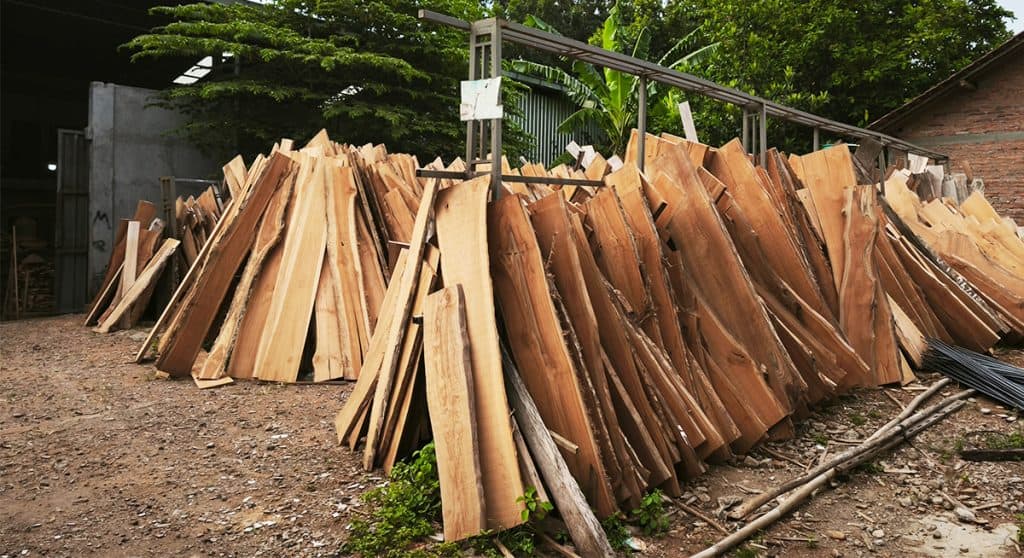
Properly engineered wood requires patience. Skipping steps in moisture reduction is the primary cause of joint failure and structural warping in tropical hardwoods.
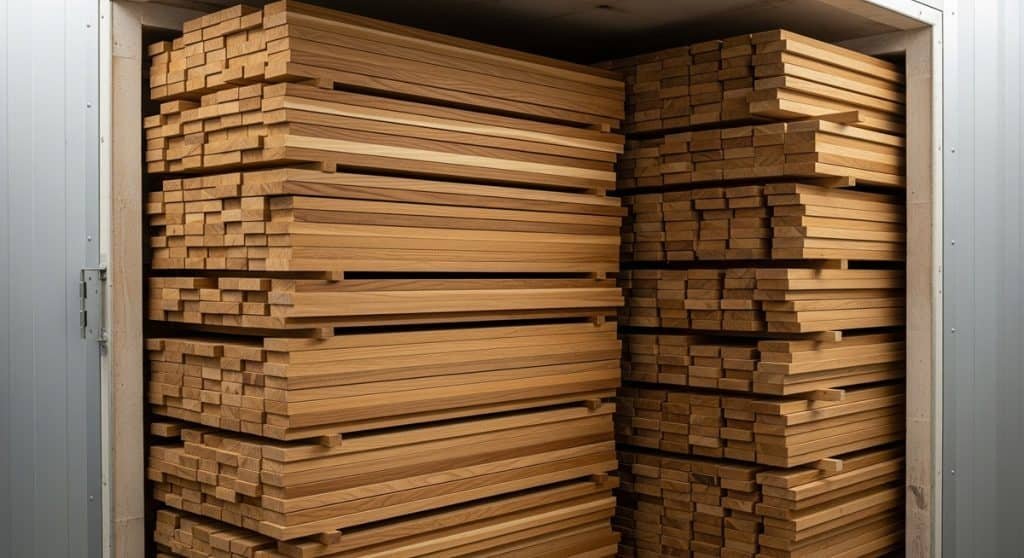
Scientific Kiln Drying: The lumber is then loaded into our computerized kilns. We carefully step down the temperature and humidity to reduce the internal Moisture Content (MC) to a stabilized 8–12%. This aligns with our strict kiln-drying standards, ensuring the wood remains inert whether destined for a dry European winter or a humid coastal resort..
Pre-Kiln Air-Drying: Before entering the kilns, our teak undergoes an essential ambient air drying phase. This gradual acclimatization prevents cellular thermal shock and surface checking.
Step 3: Precision Machining and Joinery Engineering
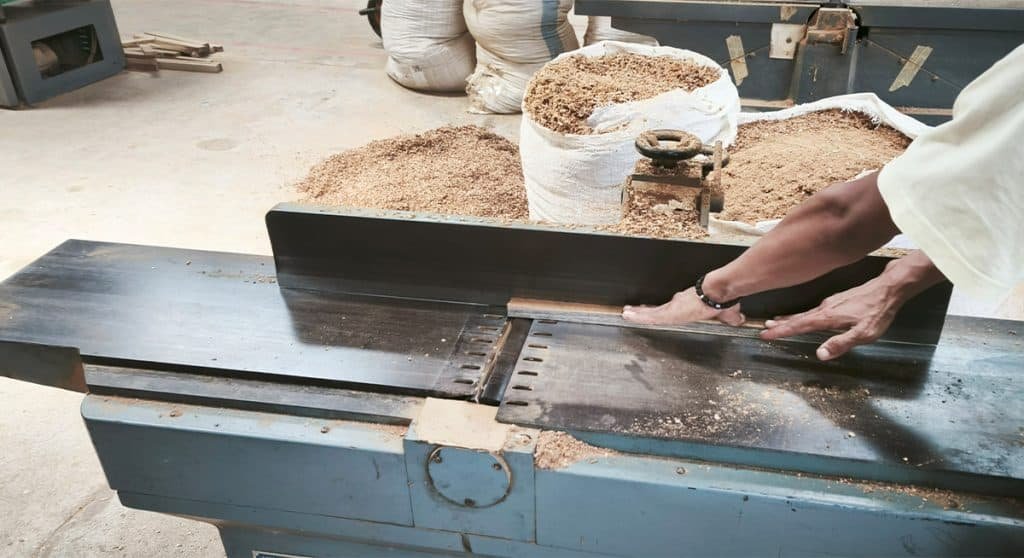
The core of our furniture manufacturing process is the integration of modern CNC machining with advanced traditional joinery techniques. We do not rely on shortcuts.
Fastener Protocol: Mechanical fasteners (screws, brackets) are strictly reserved for non structural elements or specific knock down (KD) hardware requirements. They are never used to compensate for poorly executed wood joints.
Advanced Joinery Execution: We utilize structural connections including deep Mortise & Tenon, Finger Joints, Tongue & Groove, and high tension Japanese or Scandinavian through tenon construction.
Adhesive Standards: All structural joints are bonded using industrial grade 2-part epoxy or high performance Polyurethane (PU) adhesives to ensure long term resilience under commercial use.
Step 4: Surface Preparation and Commercial Finishing
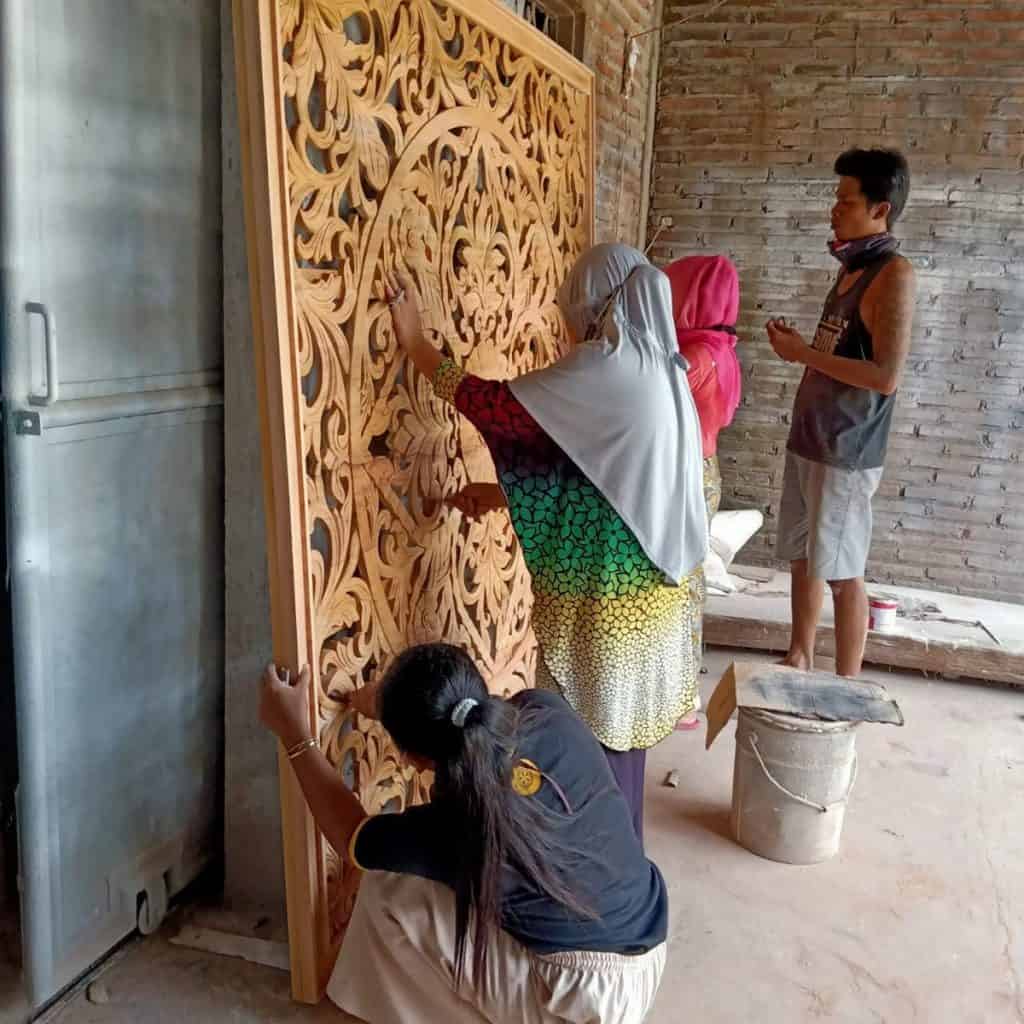
A durable finish requires a perfectly calibrated substrate. Our surface preparation involves a multi stage, systematic sanding protocol. Because we refuse to use cosmetic fillers, the wood must be dimensionally perfect before any coating is applied.
Once the substrate is prepped, components move to our environmentally controlled spray booths. Depending on the project specification, we apply:
- High-performance Polyurethane (PU) for high traffic hospitality environments.
- Nitrocellulose (NC) lacquer for a traditional, highly repairable commercial grade finish.
- Penetrating natural oils for projects demanding raw, tactile structural honesty.
For a deeper dive into our chemical applications, review our technical guide to teak furniture finishes.
Step 5: Tolerances, Quality Control, and Container Execution

Before any item clears our facility, it must survive our multi-point quality control system.
Our internal QA engineers verify all components against the original CAD shop drawings, checking dimensional tolerances, joint tightness, and hardware functionality.
Finally, Naramulya guarantees scalable B2B capacity. Our logistics team is equipped to execute everything from bespoke boutique orders to highly coordinated, full 20ft and 40ft container (FCL) loads. We utilize multi layer protective packaging (edge-protection, high density foam, and corrugated transit boxing) to ensure your shipment arrives with the exact technical precision with which it left our workshop.
Partner with a facility that understands the engineering behind the aesthetic. For project inquiries and container scheduling, contact our technical team today..
Conclusion: A Process Built on Trust
The journey from a log in a forest to a finished frame in a shipping container is a long and complex one. At Naramulya, our furniture manufacturing process is designed to be transparent, reliable, and centered on an unwavering commitment to quality at every single step. It is this process