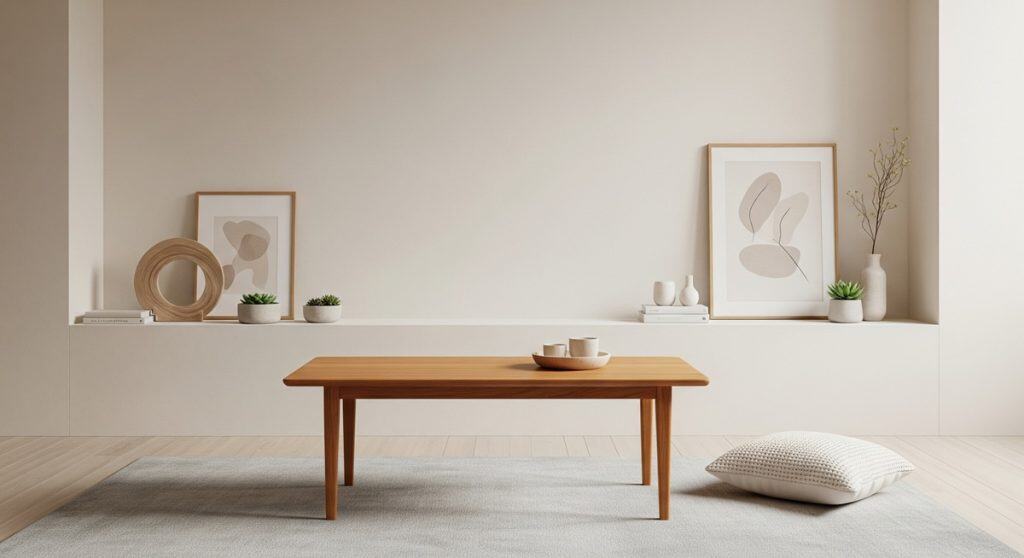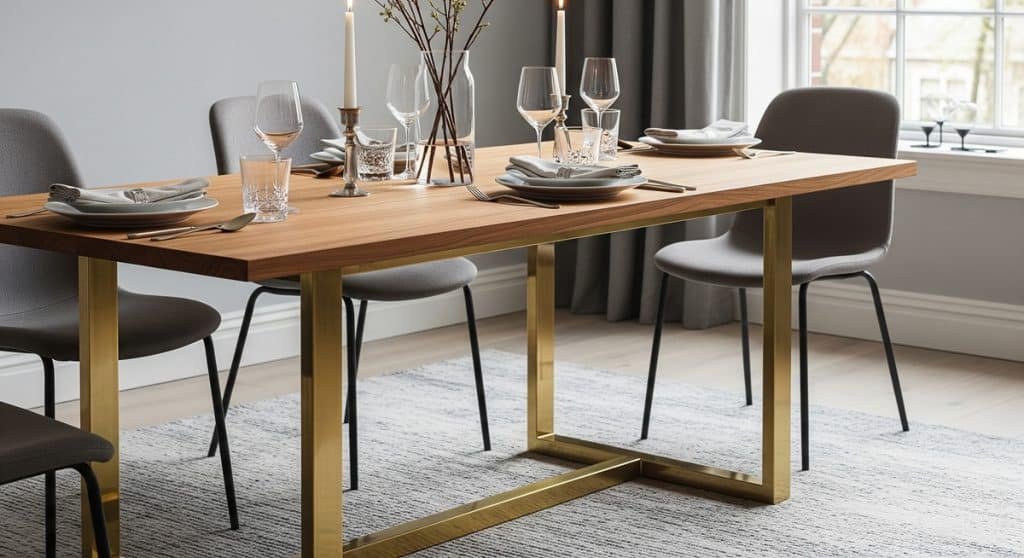
In high-density commercial real estate and boutique hospitality development, spatial footprint is the most expensive commodity. The architectural challenge is no longer merely furnishing a suite; it is maximizing spatial ROI (Return on Investment) without compromising the luxury experience or creating visual clutter.
To solve this, architects and procurement managers specify multi-functional furniture. However, in a B2B context, “multi-functional” introduces a severe mechanical vulnerability: moving parts.
While consumer-grade transformer furniture relies on inferior substrates and cheap pivot mechanisms that fail within months of commercial deployment, Naramulya treats multi-functional design strictly as a kinetic engineering discipline. This technical guide outlines how our facility engineers high-utility casework capable of surviving relentless commercial operation.
1. The Hardware Imperative: Kinetic Load and Cycle Testing

A static cabinet is simple; a multi-functional piece is a dynamic mechanical system. A lift-top desk, a pull-out vanity, an expandable conference table, or a rotating media console—these all rely on heavy-duty mechanisms to function smoothly and safely.
The primary failure point of multi-functional furniture in hospitality environments is not the wood; it is the metal hardware snapping or binding under dynamic shear stress.
The Naramulya Execution: We do not install unbranded, low-tier mechanics. We engineer our multi-functional pieces using certified, industrial-grade hardware specified for commercial deployment.
- Cycle Testing: We specify synchronized full-extension slides, heavy-duty gas struts, and concealed hinges rated for a minimum of 80,000 to 100,000 cycles.
- Dynamic Load Capacity: We calculate deflection based on dynamic loads (the weight the hardware can support while in motion), guaranteeing that a fully loaded drawer or a cantilevered desk surface will not sag or shatter its ball bearings when deployed by a guest. (Review our complete Specifier’s Guide to High Quality Furniture Hardware).
2. Substrate Anchoring: The Tectona Grandis Advantage
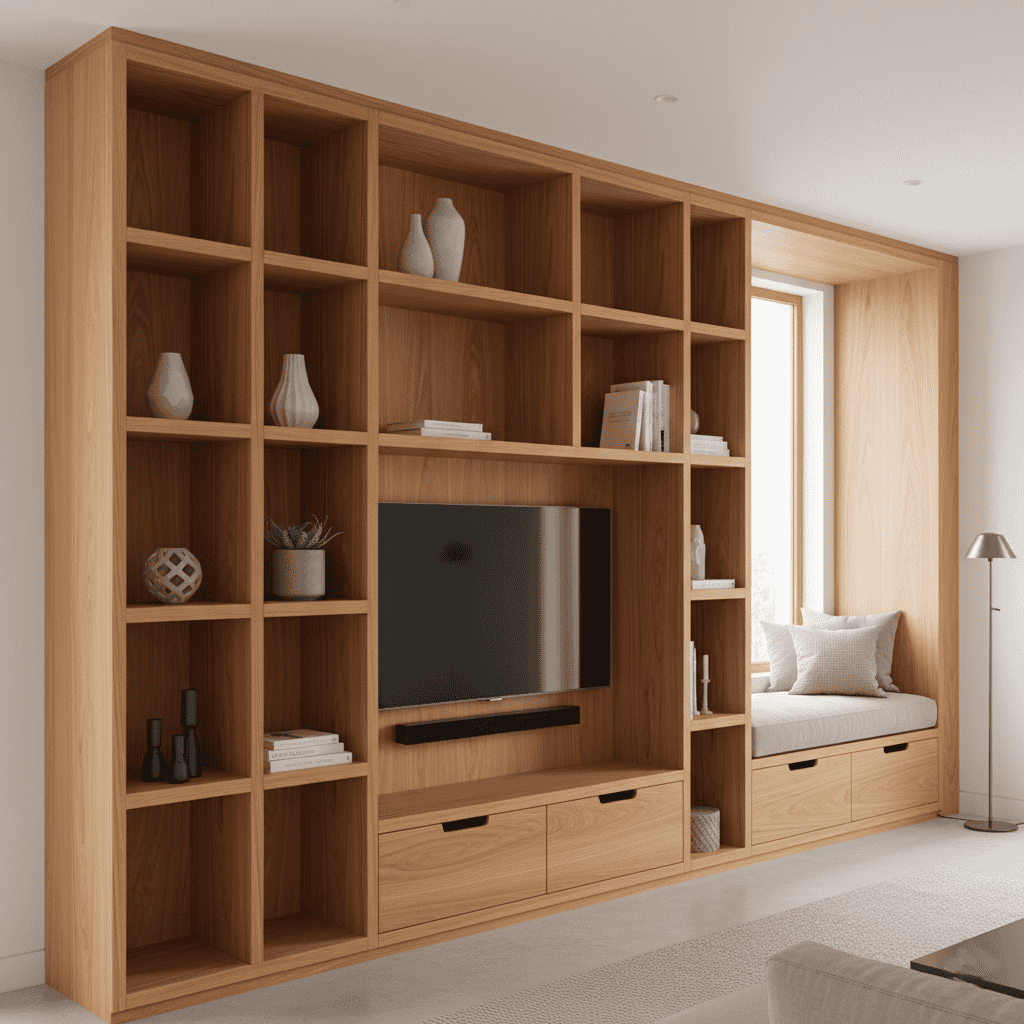
High-performance hardware is entirely useless if the substrate it anchors into cannot handle the kinetic transfer of force. As detailed in our analysis of Solid Teak vs. Composite Substrates, materials like MDF or particleboard suffer from rapid fiber degradation. When a heavy-duty lift mechanism is deployed repeatedly, it will literally tear the screws out of an MDF board.
The Naramulya Execution: We execute all structural multi-functional frames using solid Tectona Grandis (Indonesian Teak). Its dense, continuous long-grain fiber matrix provides an immovable, high-tensile anchor for complex hardware. The physical hardware is bolted into a substrate that will not crumble under torque.
Furthermore, all solid wood components utilized in these mechanical assemblies are strictly governed by our thermodynamic kiln-drying protocol, locking the core at an 8-12% Equilibrium Moisture Content (EMC). This prevents the wood from warping, which is absolutely critical—even a 2mm warp in a moving panel will cause the entire mechanical system to bind and fail.
3. High-Utility Execution for Hospitality
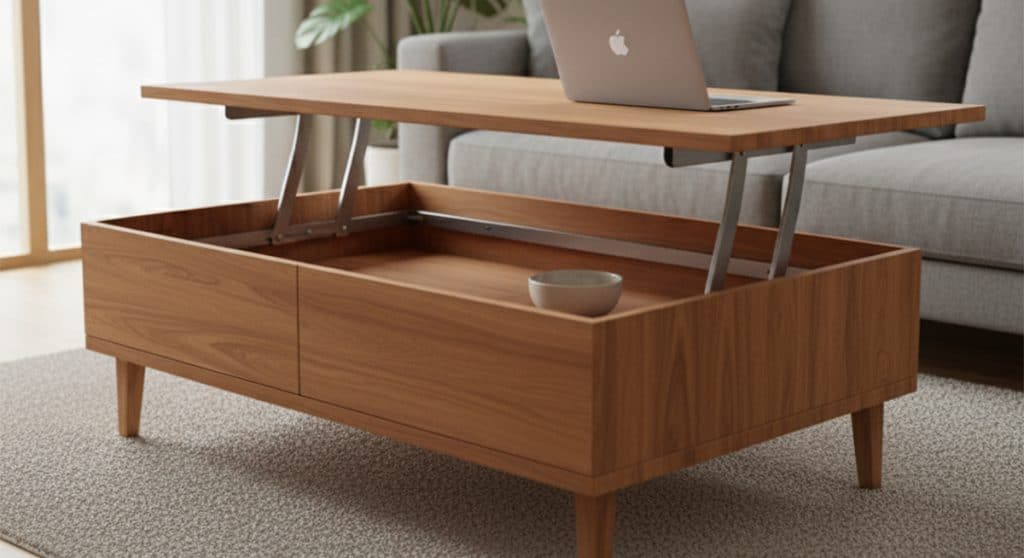
By merging high-performance kinetic hardware with dimensionally stable teak, we manufacture bespoke, space-saving solutions for commercial projects, including:
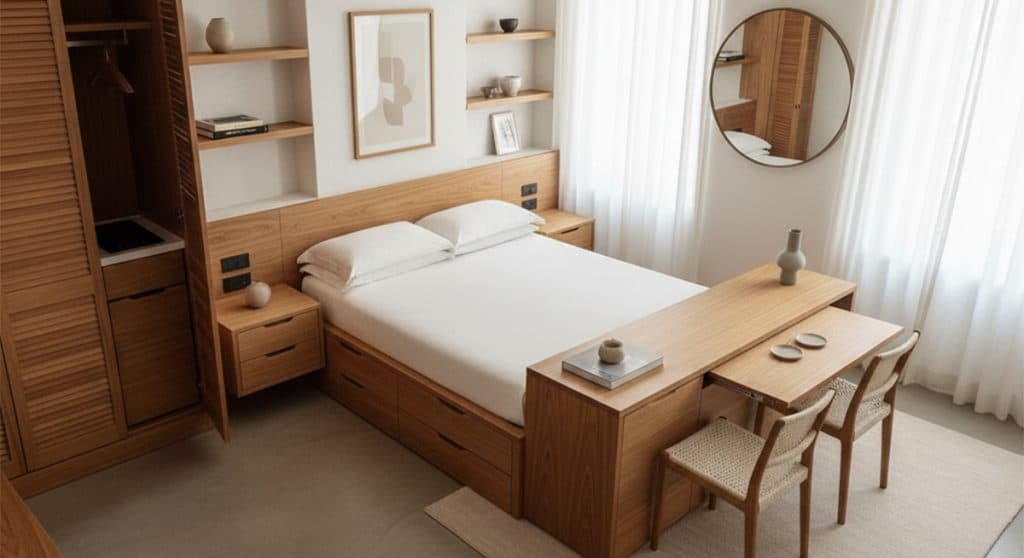
- Integrated Bedframe Casework: Platform beds engineered with heavy-duty, full-extension under-bed storage drawers, eliminating the spatial need for standalone dressers in compact boutique suites.
- Transformative Workspaces: Slim-profile wall consoles and credenzas equipped with synchronized pull-out surfaces that transition seamlessly from a luggage rack to an executive work desk or a vanity.
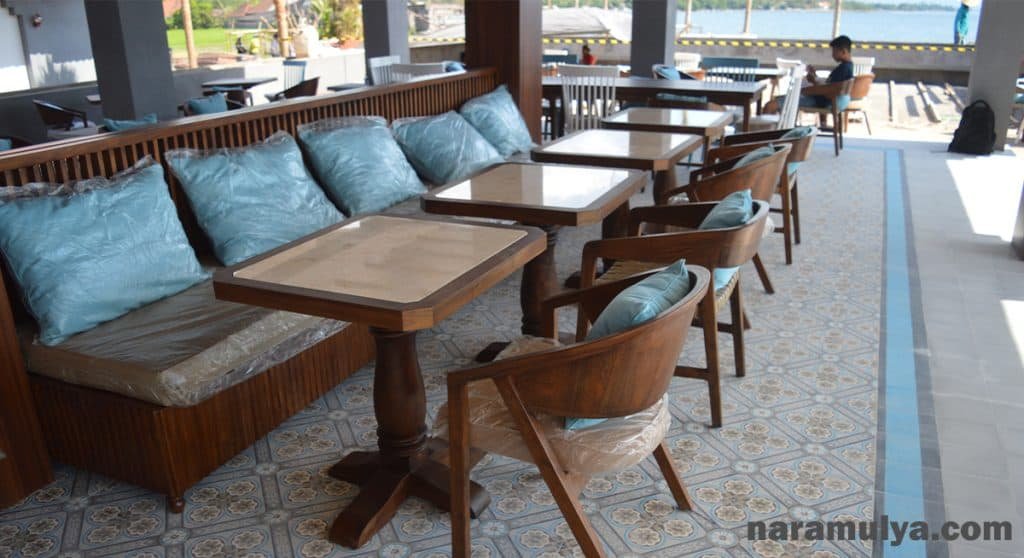
- Modular Seating Matrices: Commercial lounge seating designed with interlocking Javanese joinery, allowing configurations to pivot from unified lobby sectionals to isolated, intimate seating pods without compromising structural rigidity.
Application in Action: Key Pieces for B2B Projects
- For Boutique Hotels: The custom bed frame with built-in, full-extension drawers. The integrated headboard with recessed shelving and built-in charging ports. The slim-profile wall desk that serves as both a work surface and a vanity.
- For Urban Residential: The solid wood storage ottoman that doubles as a coffee table. The console table that cleverly expands to seat six for dinner. The modular sofa system with integrated side tables and storage.
Conclusion: Eliminating the Compromise
Specifying multi-functional furniture for a commercial project should not mean accepting a shorter product lifespan. It is an exercise in mechanical precision.
At Naramulya, we ensure that your space-saving designs are backed by uncompromising material science, zero-tolerance joinery, and cycle-tested hardware. When you require intelligent spatial solutions built for decades of heavy utility, submit your technical drawings or BOQ to our engineering team. Let us build the mechanics behind your design.