Unlike retail suppliers who mask subpar metal components behind a beautiful teak facade to cut production costs, our technical workshop views hardware as the kinetic engine of the furniture.
A structurally flawless Tectona Grandis cabinet means nothing if the door sags due to a sheared hinge pin, or if a drawer binds because a cheap slide deformed under a dynamic load. In high-traffic commercial environments, casework rarely fails at the wood; it fails at the metal pivot points.
For architects, interior designers, and B2B procurement managers, specifying high-quality furniture hardware is an operational calculation, not a cosmetic choice. This guide breaks down the engineering metrics we use to evaluate, select, and install hardware for commercial-scale fabrication, while maintaining total agility to meet your project’s exact specifications.
1. The Financial Reality of Hardware Failure
In hospitality and commercial deployment, the necessity of high-quality furniture hardware becomes a mathematical certainty. Specifying inferior components is a catastrophic financial miscalculation.
- The Cost of Operational Downtime: When a soft-close hinge fails in a boutique hotel room, the cost is not just the $5 replacement part. It is the labor cost of the maintenance engineer, the operational downtime of the room, and the direct hit to the brand’s hospitality standard.
- Kinetic Wear and Tear: Commercial furniture is subjected to thousands of kinetic impacts per year. We calculate hardware durability based on Cycle Ratings—the verifiable number of times a mechanism can be opened and closed under load before mechanical failure.
2. Hinges and Pivot Mechanics: Spec-Driven Material Selection
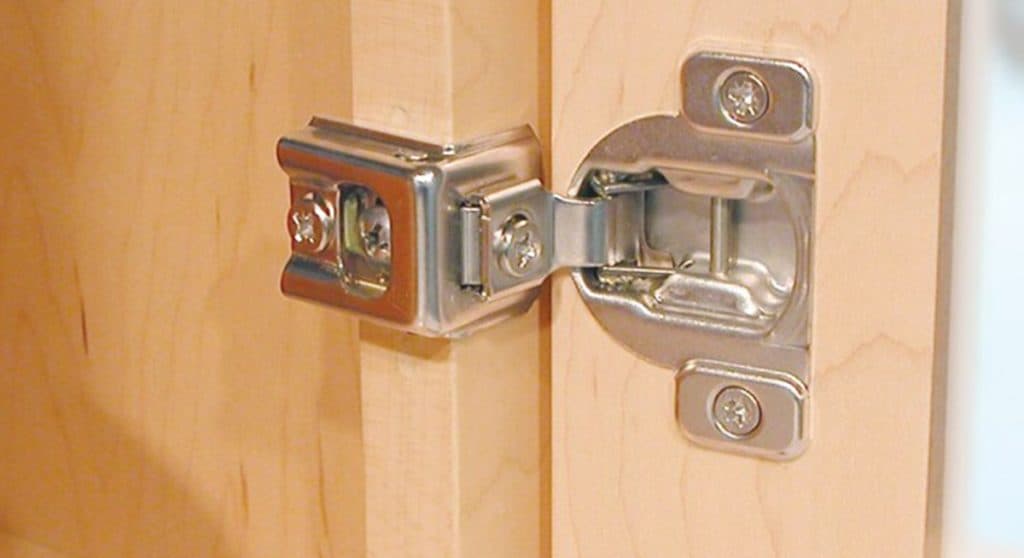
There is no single “correct” hinge for commercial casework. Our facility does not dictate a one-size-fits-all approach; we execute based entirely on the client’s architectural specifications.
While the European-style concealed hinge is a common baseline for modern designs, we frequently fabricate utilizing exposed solid brass hinges for heritage reproductions, or heavy-duty pivot hinges for massive architectural doors. Regardless of the style, the engineering parameters remain strict.
Technical Specifications to Audit:
- Agile Material Execution: While our internal baseline defaults to 304 or 316-grade Stainless Steel for its ultimate salt-spray corrosion resistance in coastal hospitality projects, we are fully adaptable. We execute client specifications using solid brass, heavy nickel-plated steel for climate-controlled interiors, or specialized powder-coated alloys. The material is dictated by your project’s environment; the quality is dictated by our execution.
- Cycle-Testing Certification: Regardless of the material, we advise specifying hinges rated for a minimum of 80,000 to 100,000 cycles.
- 3-Dimensional Cam Adjustability: For modern concealed applications, high-performance hinges must feature integrated cam screws. This allows maintenance teams to execute micro-adjustments in three axes (X, Y, and Z) without removing the door, ensuring perfect gap tolerances over decades of use.
3. Drawer Slides: Dynamic Load Ratings and Deflection

The drawer slide dictates the entire functional experience of a nightstand, credenza, or commercial desk. Just like our hinge protocols, the type of slide—whether it is a concealed under-mount for a seamless aesthetic or a heavy-duty side-mount ball-bearing slide for industrial utility—is driven by the client’s Bill of Materials (BOM).
Technical Specifications to Audit:
- Dynamic vs. Static Load Capacity: Never specify based on static load. A slide must be rated for its Dynamic Load (e.g., 35kg or 40kg)—its capacity to support weight while moving. Cheap slides will suffer from lateral deflection (bending) when pulled out fully under load, causing the ball bearings to grind and eventually shatter.
- Full-Extension Synchronization: For deep commercial drawers, we recommend synchronized full-extension slides. A rack-and-pinion synchronization mechanism ensures both the left and right profiles extend at the exact same millisecond, preventing the drawer from racking or binding when pulled from an off-center angle.
4. The Role of Fasteners in Solid Wood Fabrication
In highly engineered woodworking, metal fasteners (screws, bolts, cam-locks) should never bear the primary shear load.
As detailed in our structural guidelines, the core stability of our frames relies entirely on interlocking Javanese joinery reinforced with industrial PU adhesives. When we do utilize metal fasteners—such as threaded inserts or heavy-duty hex bolts—they are strictly for “Knock-Down” (KD) logistics, allowing massive dining tables or bed frames to be shipped flat and assembled on-site without sacrificing tension.
5. Naramulya’s Auditing and Agile Execution Protocol
Our commercial-scale facility procures and installs high-quality furniture hardware with the same rigid data tracking we apply to our timber.
- Supply Chain Auditing: We do not buy unbranded bulk hardware. We exclusively partner with vetted, industrial-grade hardware manufacturers (such as Blum, Häfele, or client-nominated suppliers) who provide documented cycle-test data and load-rating certifications.
- Client-Specified Execution: We are an agile B2B partner. Whether your project requires 100,000-cycle hydraulic stainless hinges for an F&B space, or un-lacquered solid brass hardware to develop a natural patina in a boutique villa, we procure and install precisely to your spec sheet. We optimize the functional lifespan without overriding your design intent.
- Mechanical QC Verification: During final assembly, our engineers do not merely inspect the wood. Every pivot point, slide, and locking mechanism is repeatedly stress-tested. We verify gap tolerances and acoustic profiles (listening for grinding or clicking) as a mandatory phase of our multi-point quality inspection system.
Conclusion: Specifying the Complete System
A piece of commercial-grade furniture is a unified structural system; its lifespan is dictated by its weakest component. Selecting superior teak while compromising on high-quality furniture hardware is an engineering failure.
By executing your exact specifications using certified cycle-tested components, verified load ratings, and application-specific alloys, we ensure that the kinetic parts of our furniture match the centuries-long lifespan of the timber itself.