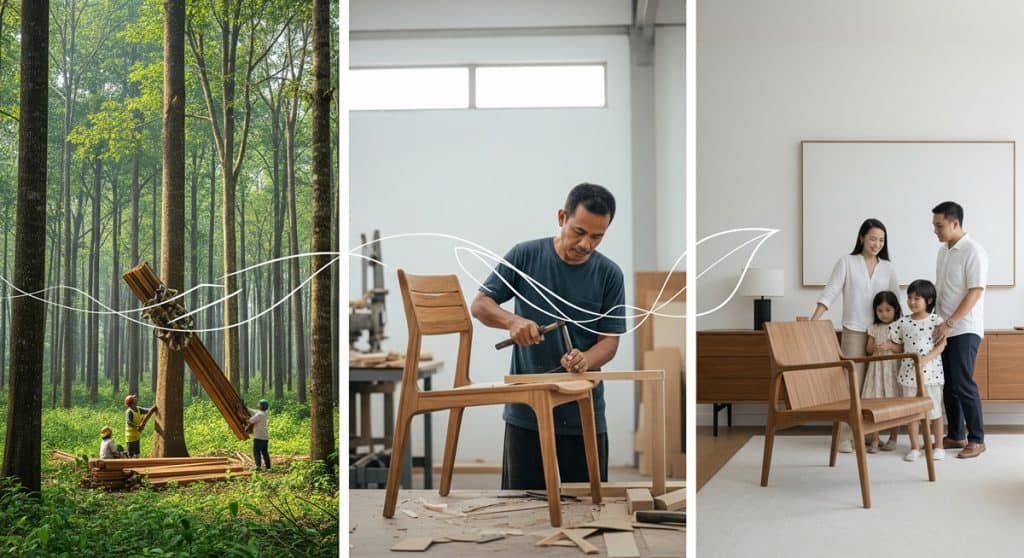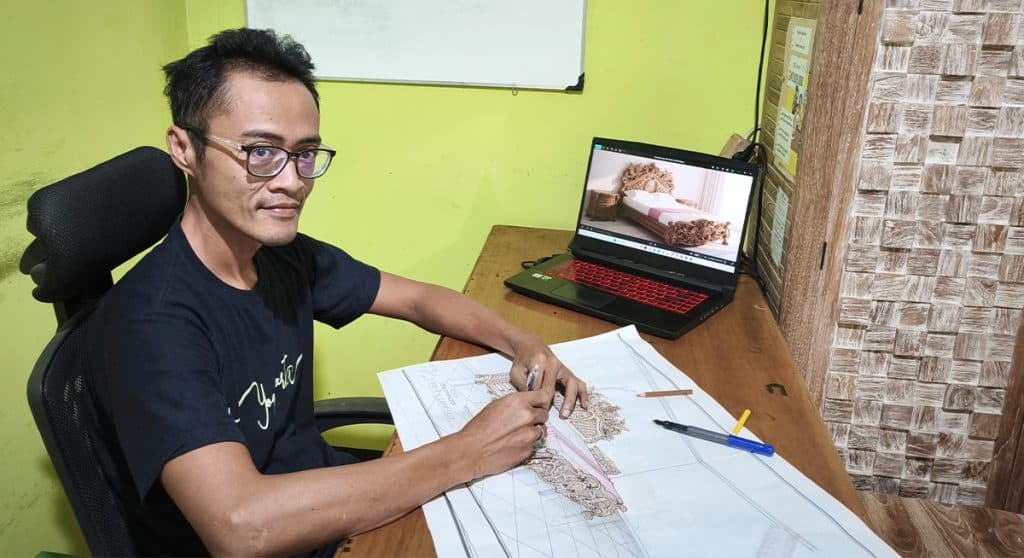
Modern furniture manufacturing technology offers incredible precision, but it can’t replicate the soul of true craftsmanship. In the world of furniture production, a false narrative often exists: the fully automated factory versus the solitary artisan. For a professional architect or designer specifying furniture for a high-stakes project, neither extreme is ideal. You need the quality of craftsmanship, but you also need the scale and reliability that only modern technology can provide.
At Naramulya, we have built our business on rejecting this false choice. We believe in a powerful middle ground where technology serves craftsmanship. Our investment in modern woodworking machinery is not about replacing our artisans; it’s about empowering them to do their best work, more accurately and more efficiently than ever before.
This guide provides a transparent look into our philosophy. It’s how we deliver the scale and precision our B2B partners require, without ever sacrificing the soul and quality that defines Naramulya.
Section 1: The Role of Modern Machinery – Precision, Consistency & Scale
For our partners in the design and architecture community, three things are non-negotiable when working with a manufacturer: precision, consistency, and the ability to scale production for large projects. This is where a strategic investment in furniture manufacturing technology becomes a critical asset. It allows us to guarantee a level of quality that is simply not possible to achieve consistently with hand tools alone.
Our modern facility in Jepara is equipped with specialized machinery for the most critical tasks:
- Panel Saws & CNC Machines: When you need to execute precise technical drawings, accuracy is paramount. Our computer-controlled panel saws and CNC (Computer Numerical Control) machines can cut large sheets and complex shapes to sub-millimeter tolerances, ensuring every component is dimensionally perfect. This is essential for creating the clean lines of modern furniture and for ensuring that a large order of 100 identical chairs are truly identical. For a deeper look into this technology, industry resources like the Woodworking Network’s overview of CNC are an excellent educational starting point.
- Wide Belt Sanders: Achieving a perfectly flat, uniform surface on a large dining tabletop is a significant challenge. Our industrial wide belt sanders can accomplish in minutes what would take days of manual labor, resulting in a flawless, level surface that is ready for finishing.
- Modern Kilns: As we’ve detailed in our guide to kiln-drying, our modern, computer-controlled kilns are a core part of our furniture manufacturing technology. They allow us to use a data-driven, scientific approach to properly dry our timber, guaranteeing the stability of the final product.
Section 2: The Irreplaceable Value of Hand Skills – The Soul of the Craft
Technology, for all its precision, has its limits. It has no eye for beauty, no feel for balance, and no understanding of the unique character of a piece of wood. The true quality and soul of a piece of furniture come from the irreplaceable expertise of our artisans. Their hands-on skill is the element that elevates a product from being merely well-made to being truly exceptional.
There are critical tasks that machines simply cannot do:
- Grain Selection and Matching: Before a single cut is made, a craftsman will lay out the raw planks for a tabletop, carefully selecting and arranging them to create the most beautiful and continuous grain pattern. This artistic judgment is something no algorithm can replicate.
- Fine Assembly and Joinery: The careful, precise fitting of a complex mortise and tenon joint requires a nuanced feel for the wood. It’s about creating a connection that is perfectly tight without being stressed, ensuring the joint will hold for a lifetime through advanced joinery techniques.
- Final Sanding and Shaping: While a machine can sand a flat surface, it cannot replicate the sensitive touch required to perfectly smooth a curved chair leg, a rounded tabletop edge, or the intricate details of a carving. This final, tactile step is what gives the furniture its smooth, inviting feel.
- The Final Quality Check: Ultimately, the final decision on whether a piece meets the Naramulya standard comes down to the experienced eye of a master craftsman. They inspect the finish, check every joint, and feel every surface, providing a level of quality assurance that a sensor cannot.
Section 3: Our Synergy in Action – Building a Better Product
The true power of our process lies in the seamless synergy between our machines and our craftsmen. Let’s walk through the creation of a custom dining table to illustrate this partnership, which is central to our approach to furniture manufacturing technology:
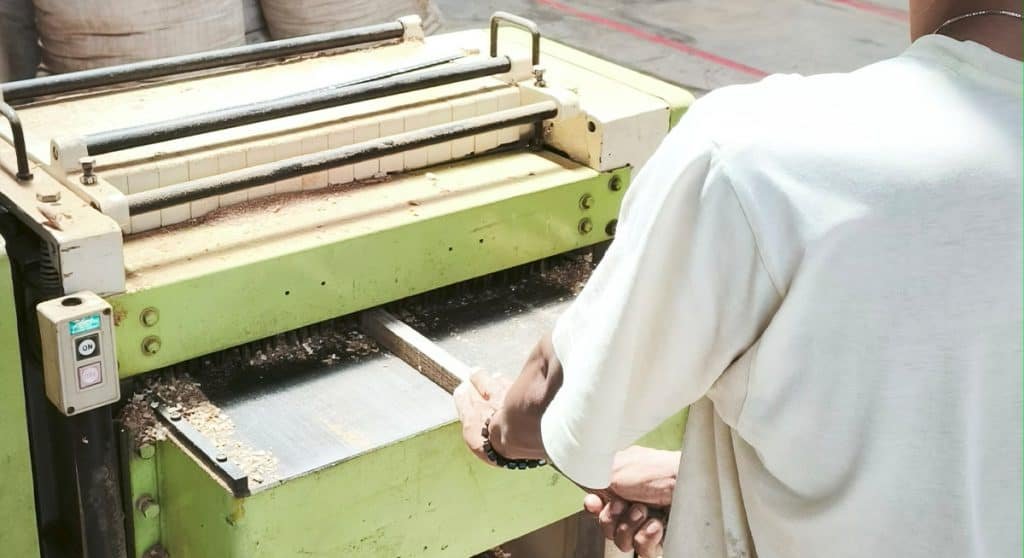
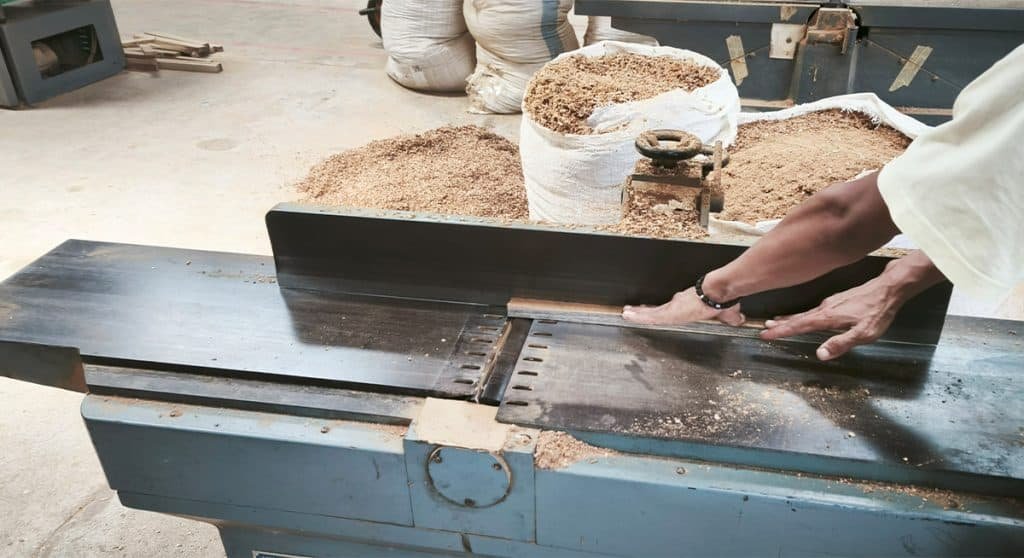
- The Machine Starts: The rough, kiln-dried teak planks are fed through our industrial planer and jointer, creating perfectly flat and square edges with machine precision. The main components are then cut to their exact final dimensions on our panel saw.
- The Craftsman Takes Over: The craftsman receives these perfectly dimensioned components. He examines the grain of each plank, arranging them to create the most visually stunning tabletop pattern. He then uses his skill to join and glue the planks together.
- Back to the Machine: The assembled tabletop is passed through our wide belt sander to ensure the entire surface is flawlessly flat and uniform.
- The Craftsman Finishes: The craftsman takes the perfectly flattened top and performs the final, detailed work. He shapes and sands the edges by hand, gives the entire surface its final, fine sanding, and assembles the base using time-honored joinery techniques.
This back-and-forth process results in a product that has the best of both worlds: the unerring precision of modern furniture manufacturing technology and the soulful touch of a master artisan.
Conclusion: Empowering Craftsmanship Through Technology
Our investment in technology is not a departure from the traditions of Jepara craftsmanship; it is an enhancement of them. We believe that the best way to honor the skill of our artisans is to provide them with the best possible tools. This synergy is the core of our manufacturing philosophy.
This balanced approach of precision furniture engineering allows us to deliver the scale, consistency, and accuracy that our B2B partners require for their most demanding projects. It’s how our expert use of furniture manufacturing technology ensures we never sacrifice the character, quality, and soul that makes a piece of Naramulya furniture a true, lasting investment.