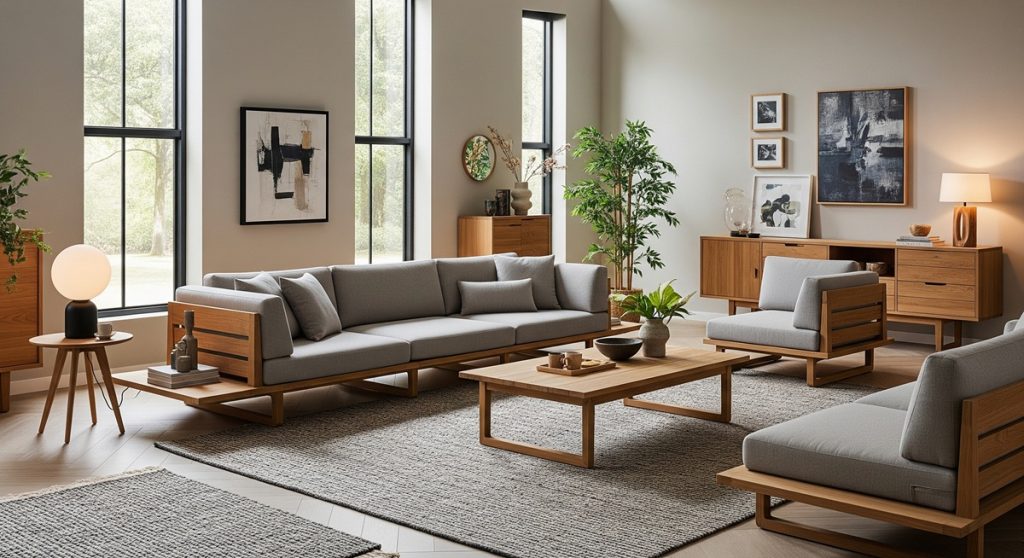

In high-traffic commercial architecture and hospitality procurement, specifying furniture is a rigorous mathematical calculation. The initial capital expenditure (CapEx) of a product is irrelevant if its operational expenditure (OpEx) is inflated by constant maintenance, repair, and premature replacement cycles.
When evaluating substrates for commercial deployment, Tectona Grandis (Indonesian Teak) consistently outperforms composite boards, softwoods, and lesser hardwoods. At Naramulya, we do not view teak as a luxury aesthetic; we view it strictly as a high-performance structural substrate.
This Lifecycle Cost Analysis (LCA) breaks down the engineering economics of solid teak wood furniture, detailing why it remains the most mathematically sound investment for demanding B2B environments.
1. Kinetic Resistance and Replacement Cycles

In a bustling hotel lobby or a high-volume restaurant, furniture is subjected to thousands of kinetic impacts, lateral drag forces, and dynamic shear stresses annually.
Inferior materials—such as MDF, particleboard, or softwoods (like pine)—suffer from rapid fiber degradation under these loads. Fastener boreholes elongate, joints loosen, and the structural frame inevitably wobbles, typically forcing a replacement cycle every 18 to 36 months.
Teak possesses an exceptionally high density and tight grain structure. When paired with advanced wood-to-wood joinery (such as traditional Javanese Mortise and Tenon locked with industrial 2-part epoxy or PU adhesives), the material absorbs kinetic shock without transferring stress to isolated metal fasteners. This structural integrity extends the functional replacement cycle of commercial seating and casework from a few years to several decades, drastically reducing long-term procurement costs.
2. Chemical and Moisture Immunity

Commercial environments are hostile. Furniture is continuously exposed to spilled liquids, fluctuating HVAC humidity levels, and aggressive alkaline cleaning solvents used by housekeeping staff.
Engineered woods absorb moisture rapidly once their thin surface laminates are breached, leading to irreversible core swelling and delamination. Teak counters this through its internal biology. The wood is naturally saturated with tectoquinones (protective oils) and silica. This creates a highly hydrophobic (water-repelling) cellular matrix that naturally resists rot, moisture penetration, and chemical degradation.
Furthermore, our facility subjects all timber to a rigorous thermodynamic kiln-drying protocol, stabilizing the core to a strict 8–12% Equilibrium Moisture Content (EMC). Whether specified for a climate-controlled boardroom or a humid coastal resort patio, our teak maintains absolute dimensional stability.
3. The True Cost of Operational Downtime

For a hospitality developer, the cost of a failed piece of furniture is not simply the unit price of a replacement chair. The true financial loss is measured in operational downtime.
When a cabinet hinge shears off MDF casework or a bed frame cracks in a luxury suite, that room becomes un-rentable. The resulting downtime, combined with the labor costs of the maintenance team and the potential damage to the brand’s reputation through negative guest reviews, far exceeds the initial savings of specifying cheap flat-pack furniture.
Investing upfront in the proven structural integrity of solid teak eliminates these catastrophic failure points, ensuring continuous operational revenue.
4. Machining Tolerances for Bespoke Fabrication

Architectural projects frequently require custom geometries to fit specific spatial constraints. Solid teak is a superior medium for custom made teak furniture because of its predictable machinability.
Unlike reclaimed timbers which can shatter router bits with hidden nails, or composite boards which splinter under complex routing, high-grade plantation teak allows our engineers to calibrate CNC machinery to exacting micro-tolerances of 0.15mm to 0.20mm. This ensures that every joint, track, and reveal in a custom architectural built-in aligns perfectly, enforcing our strict zero-filler policy and eliminating the need for cosmetic putties to hide sloppy execution.
5. Verifiable ESG Compliance
Modern commercial development is strictly governed by Environmental, Social, and Governance (ESG) mandates. Specifiers cannot rely on unverified supply chains.
At Naramulya, our material procurement is rigidly documented. We utilize timber verified through Indonesia’s SVLK (Sistem Verifikasi Legalitas Kayu) system. This government-mandated chain-of-custody audit guarantees that every plank utilized in your project is legally harvested and 100% traceable, seamlessly satisfying your project’s green building and sustainability requirements. For a deep dive into our raw material specifications, review our Indonesian Teak Wood Specification.
6. A Smart Financial Investment, Not a Disposable Buy
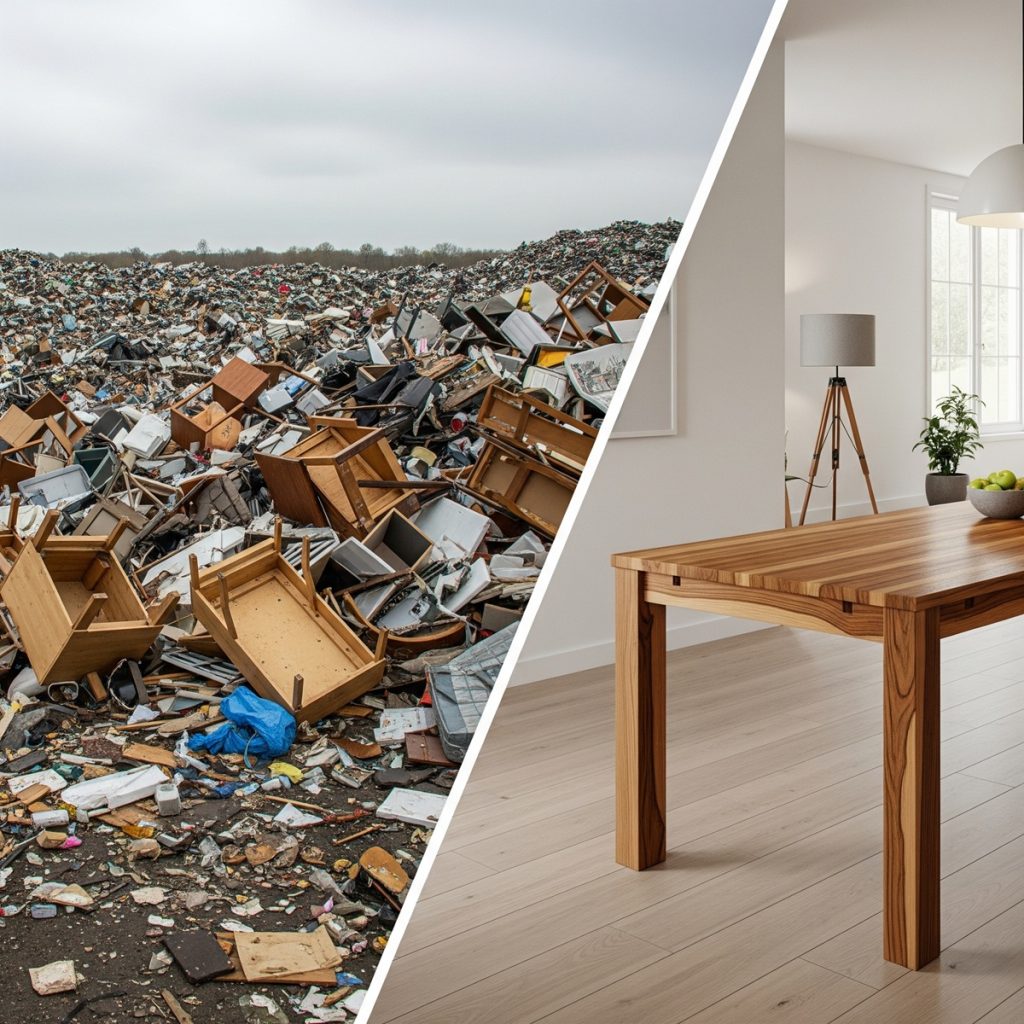
In an era of “fast furniture” designed to be replaced, teak represents enduring value. While the upfront cost is higher than materials like pine or particleboard, it saves money in the long run by eliminating the need for replacements. High-quality solid teak wood furniture often holds its value and can even appreciate over time.
📊 Pay once, enjoy for a lifetime.
Conclusion: The ROI of Structural Honesty
In commercial procurement, “fast furniture” is a financial liability. The engineering economics of Tectona Grandis are clear: the higher initial CapEx of solid teak is aggressively offset by its near-zero maintenance requirements, its immunity to moisture, and its decades-long replacement cycle.
If your project requires furniture engineered to survive relentless commercial utility without sacrificing aesthetic authority, Naramulya is ready to execute your specifications.